
Equspace consortium holds annual project meeting in Dresden and visits HZDR research facilities
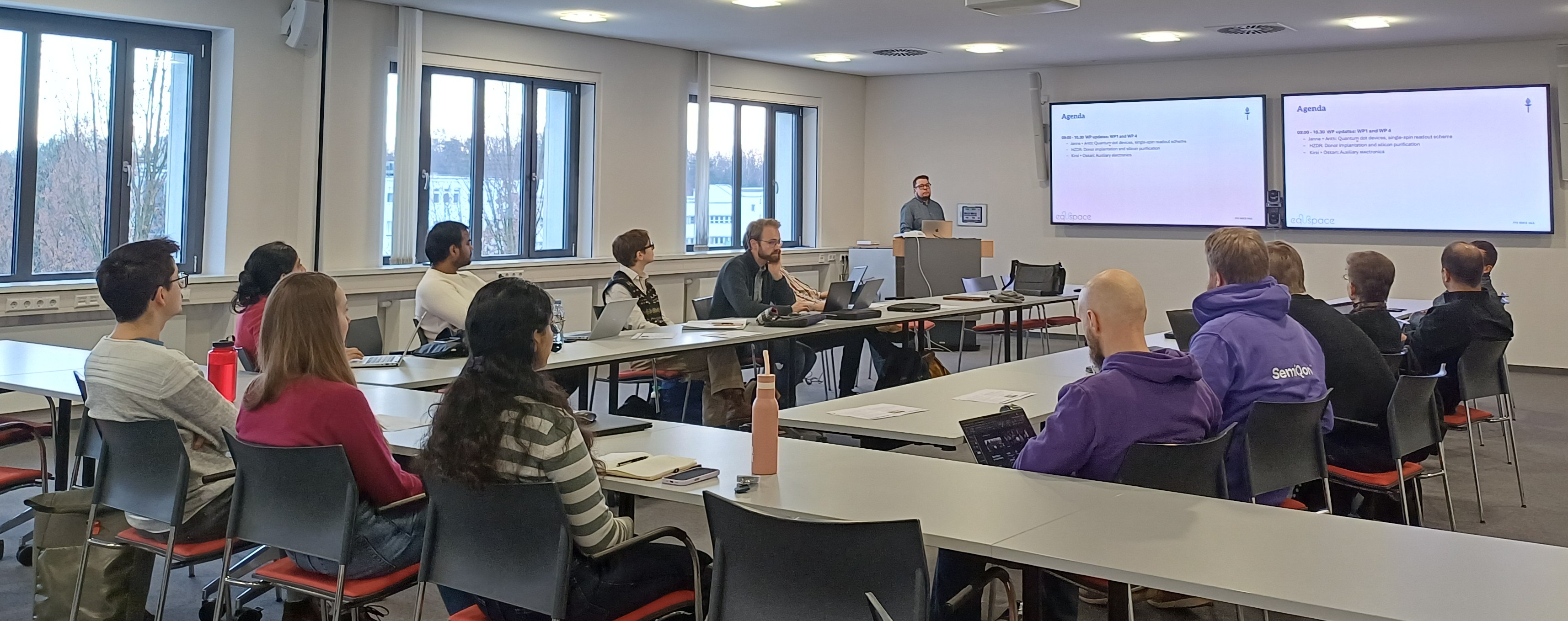
Equspace project meeting at HZDR. Project leader Professor Juha Muhonen briefs the participants on the meeting’s progress.
The Equspace project, coordinated by the University of Jyväskylä, held its annual consortium meeting in January 2026 in the historic city of Dresden, Germany. Representatives from all partner organisations participated, including VTT (Finland), the NWO institute AMOLF (the Netherlands), HZDR (Germany), and Budapest University of Technology and Economics (BME). The Finnish startup SemiQon Oy also joined the meeting.
“It was wonderful to see everyone in person, especially here at our institute, HZDR,” said physicist Dr. Nico Klingner together with Dr. Gregor Hlawacek, head of the Ion-Induced Nanostructures group at HZDR’s Institute of Ion Beam Physics and Materials Research, who jointly hosted the event.
During the meeting, project work package leaders presented their findings from the past year, highlighted progress toward scientific objectives, and discussed new research directions. Junior-researchers also showcased their work, contributing valuable insights into the overall research roadmap.
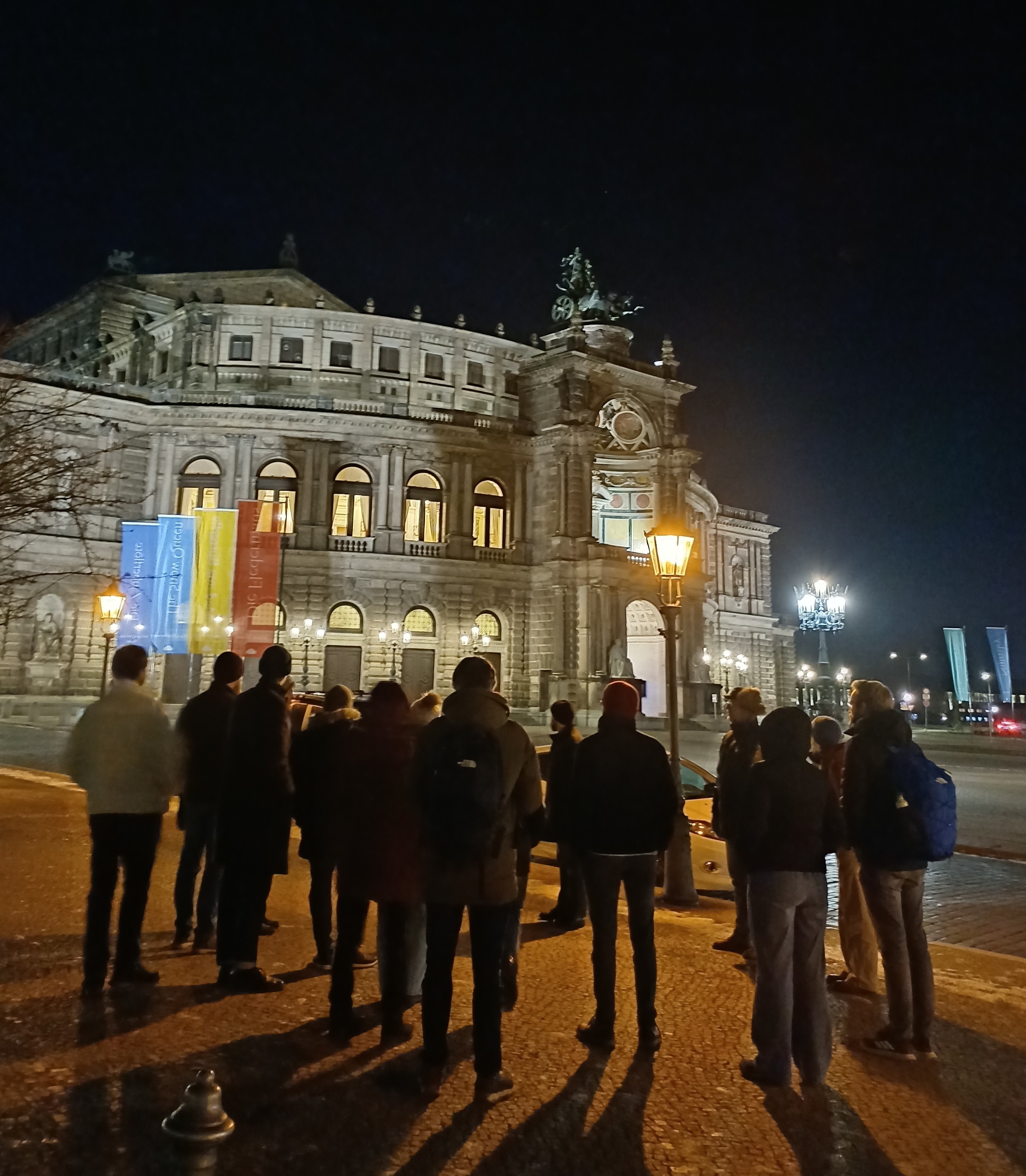
Physicist Dr. Nico Klingner introduced the historic city of Dresden on 7 January 2026.
The three‑day event was not limited to presentations. The hosts organised a tour of Dresden’s historical landmarks, as well as a visit to HZDR’s laboratory facilities, where participants were introduced to key instruments and upcoming infrastructure development plans.
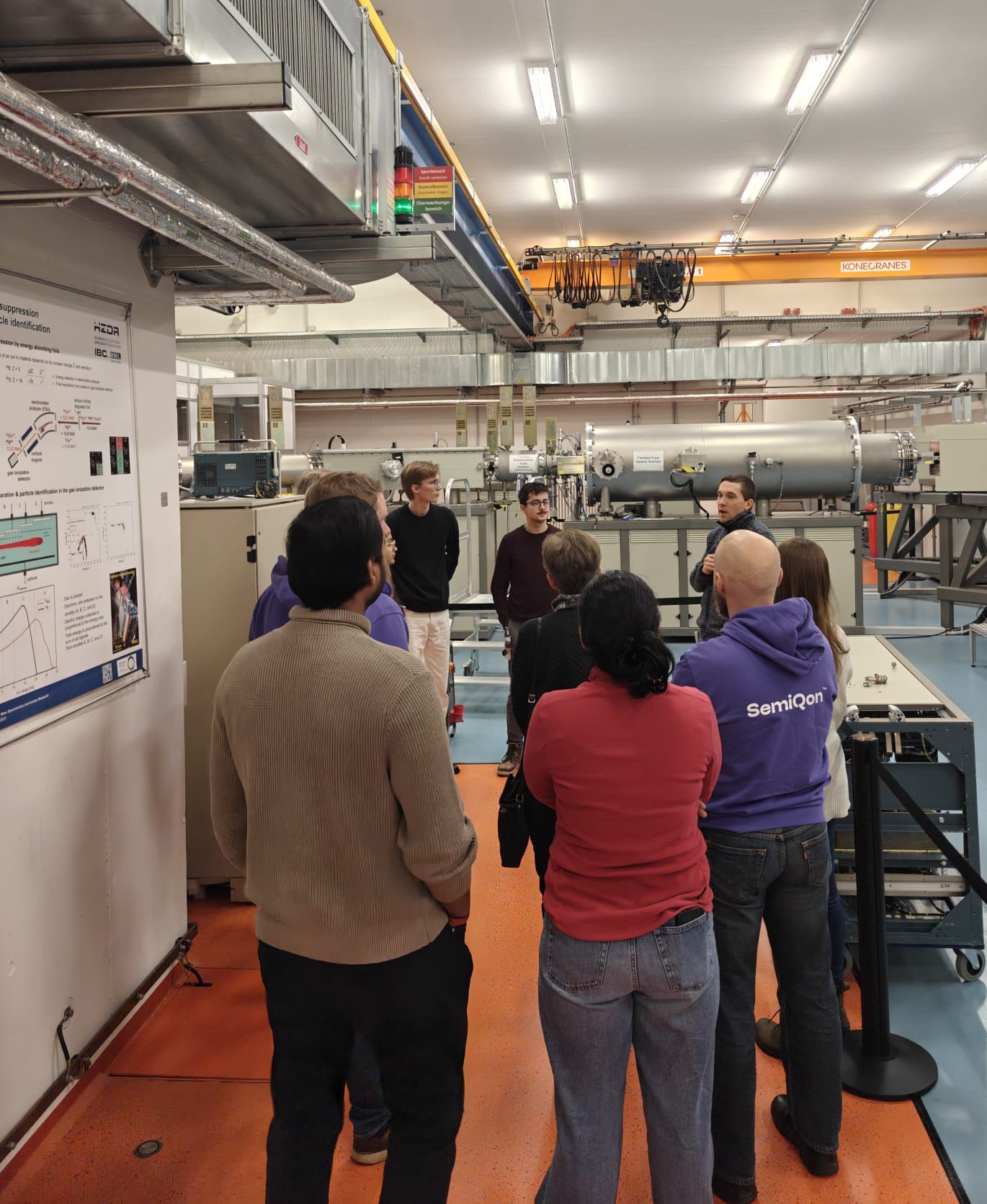
The group had the chance to tour HZDR’s laboratories under controlled access conditions.
“Seeing the laboratory in person helped me understand how our fabricated samples move through the institute and how their analysis progresses,” said Senior Quantum Engineer Janne Ikonen from SemiQon.
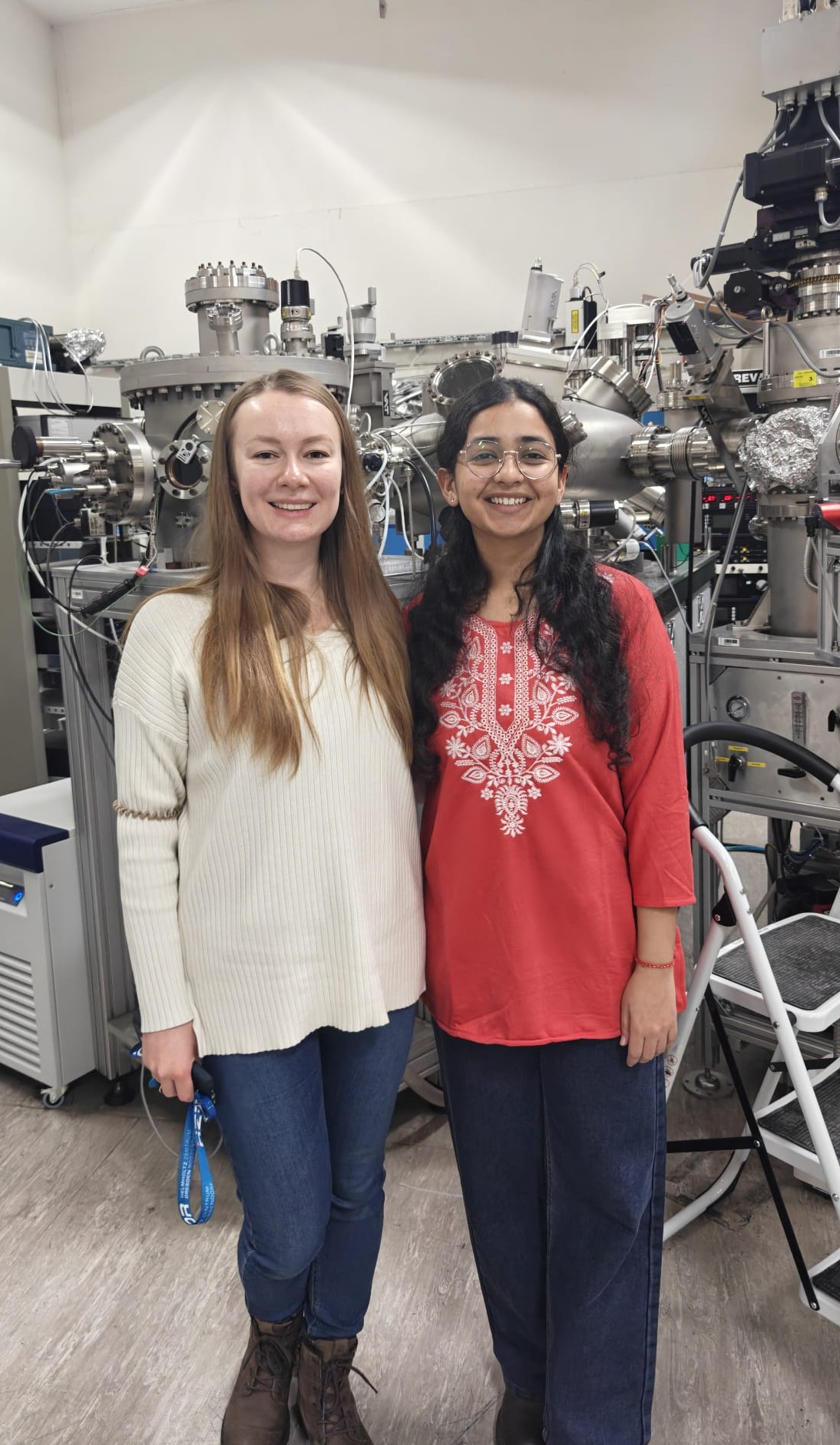
During the lab tour, postdoctoral researcher Ewelina Gacka (HZDR) and doctoral researcher Priyal Dadhich (HZDR) introduced their PhD research conducted as part of the Equspace project.
One workshop session revealed the surprising power of a traditional flip chart as a tool for collective idea generation. As discussions progressed, every researcher had the opportunity to add their own thoughts, sparking new innovations.
Despite snowy weather conditions, the in‑person meeting proved highly successful. Participants returned home with renewed enthusiasm, fresh perspectives, and a strengthened sense of shared purpose. “The meeting was extremely valuable and clarified the project’s core objectives for everyone involved,” summarized Project Coordinator, Professor Juha Muhonen from the University of Jyväskylä.
Funded by the European Innovation Council’s Pathfinder Open programme, Equspace aims to develop a scalable quantum technology platform based on silicon spin qubits. These qubits are expected to enable future breakthroughs in quantum computing and quantum sensing, opening pathways to entirely new applications and technologies.
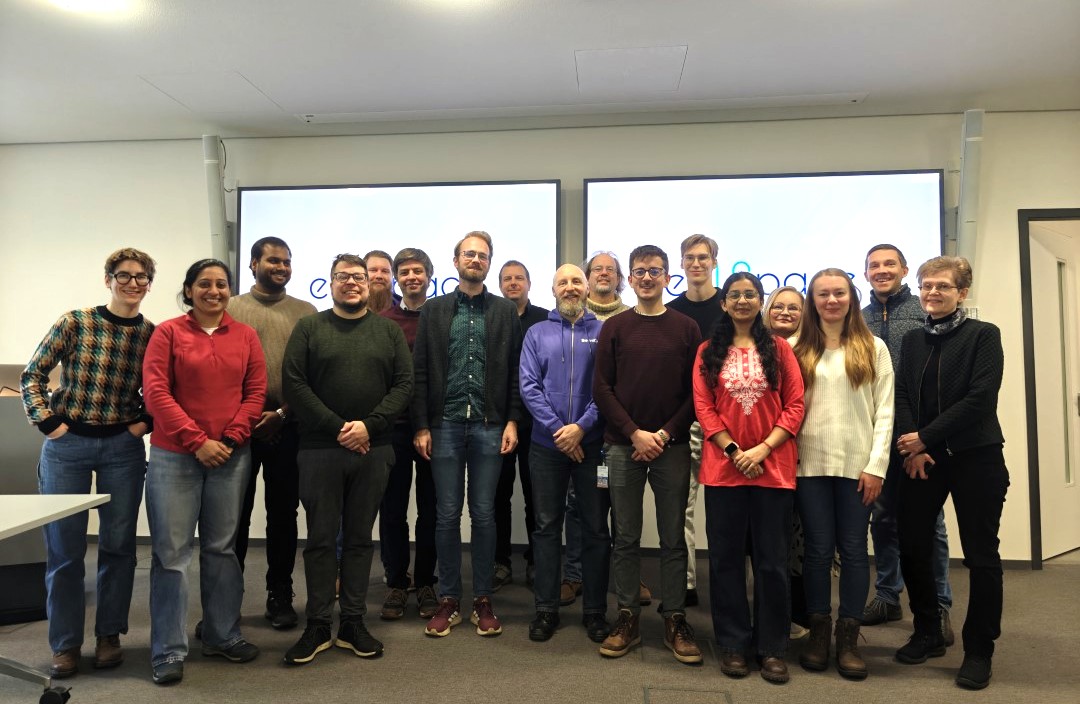
Participants gathered for a group photo during the annual Equspace project meeting. From the left: Jorien van der Meulen (PhD Student at AMOLF), Pooja Sudha (Postdoc at JYU), Harsh Kashyap (PhD student at JYU), Prof. Juha Muhonen (JYU), Antti Kanniainen (Project researcher, JYU, SemiQon), Prof. Ewold Verhagen (AMOLF), Menno Jansen (PhD candidate at AMOLF), ass. Prof. András Pályi (BME), Janne Ikonen (Senior Quantum Engineer, SemiQon), Dr. Gregor Hlawacek (HZDR), Lukas Prager (PhD researcher, HZDR), MSc Oskari Ponkala (PhD researcher, VTT), Priyal Dadhich (PhD researcher, HZDR), PhD Anniina Runtuvuori-Salmela (Coordinator, JYU), Ewelina Gacka (postdoctoral researcher, HZDR), Dr. Nico Klingner (HZDR), and D.Sc. Kirsi Tappura (Principal Scientist, VTT).